Tag Archives: Pelvic rehab

Pelvic Floor Therapy: What to Expect

Many people who are recommended to participate in pelvic floor physical therapy have a lot of questions. They have often never heard of this type of therapy and frequently asked questions are… What is pelvic floor therapy? What should I expect? What should I wear?

What is pelvic floor therapy?

Physical and occupational therapists are engaged in this type of therapy. Most of the therapists are physical therapists and that is the assumption for this article.

Pelvic floor therapy is a specialty in physical therapy that focuses on more than the pelvic floor and can include the muscles and fascia in the pelvis, hips, back, and thorax or rib-cage.

Physical therapists (PTs) and occupational therapists (OTs) who specialize in pelvic floor treat a variety of patients and problems; this can include bowel/bladder/sexual problems, prolapse, abdominal pain, back pain/pelvic pain, and more. Most therapists see women, and not all see men; additional training is needed to treat children and treating people who are transgender/non-binary may also require additional training. If you have any questions about your care and if the therapist treats your population and diagnosis it can be worth a call. 

What is the difference between pelvic floor therapy, rehabilitation or physiotherapy?

There is no big difference. Different regions have different words for the same thing; like soda vs pop.

What should I expect in the evaluation?

The basic formula for a physical therapy pelvic floor evaluation is to take a history, evaluation, and assessment. Taking a history is a conversation between you and the therapist. What your complaints are and what you want help with will be the focus. But beyond that basic formula, it really depends.

In the first session, it is important for the individual to become comfortable with the therapist. Studies have shown that the most important factor for therapy treatment to be successful is how much the individual trusts the provider. 

Beyond the basic formula, there are all sorts of variables. In general, most of the evaluation will be talking and taking a history. Some people have a more complicated history than others.  The therapist listens and then often explains how your symptoms relate to pelvic floor muscles if they are related. Frequently, hip pain or back pain may be present and are asked about and later assessed. Generally, a physical therapist that specializes in pelvic floor muscles will ask you about bowel, bladder, and sexual function.  He or she may ask additional questions to help paint a clearer picture about you; about your diet, exercise habits, stress levels, self-care, trauma history, what gives you joy, how long your problem has been going on for, what you have tried before and was that effective. If you have sexual concerns the therapist may ask you about your sexual activity, sexual orientation, gender identity, etc.  After history conversation, the evaluation continues to a physical examination. Often there is an education section; the therapist teaches about the muscles of the pelvis; the actions of the muscles and how they work. Generally, a therapist will also show what the pelvic floor assessment looks like on a pelvic model. The physical examination may start with an orthopedic assessment; looking at back/hips/rib-cage depending on the individual’s symptoms, and then may progress onto assessing the pelvic floor muscles. It truly depends on that individual’s presentation.

For example, if you have pain with intercourse and some urinary leakage, but only want help with the urinary problems because that is what affects you more in day to day life that will be the focus. The physical therapist (PT) may still ask about your pain with intercourse as the muscles do both activities.

This can all happen during the first session or may be spread over the first few sessions. It depends on how much time and how complicated the case.

The relationship between the provider and the participant is a partnership. The analogy that I often use is that therapy is like going on a road trip; the individual or participant is the bus driver and the therapist is the navigator. The navigator knows where we are going and has a road map, but which roads we use is up to the driver.

If you feel uncomfortable with any part; say so; you are the driver. There are always other roads.  A good therapist will ask for consent several times, if you have any questions, and will generally give you options on how to proceed.

What should I wear to pelvic floor therapy?

You can wear whatever you feel comfortable in and are able to move easily in. If you are coming from work you can always bring a pair of shorts or sweats to change into if that works better for you.

What else should I keep in mind?

This type of therapy can be challenging. Often there is a slowing down and pausing; which can be hard in our fast-paced culture. If you have a history of trauma (this includes medical trauma) it is not uncommon for flashbacks to occur. In general, it is strongly recommended that you have a good team working with you and on your side. Your therapist is only one member. Having additional resources like friends/family, a mental health therapist, your primary care provider, and others can help tremendously.

What should not happen during an evaluation?

Some discomfort is okay, and that level is “wow, this person is asking very personal questions” and “I don’t normally talk about this stuff” level is okay. It is okay to feel vulnerable. It is not okay to feel exposed or that you are doing something just for the therapist that you don’t feel comfortable participating in.

Pain can be a trickier concept. If pain is the reason that you are going to therapy, then you may feel some discomfort as the therapist learns about you and your pain; discomfort is more likely to be felt on the first day, but from then on the goal is to decrease your pain. Sometimes it can be a relief that someone ‘found’ you pain. However, if you feel pain or discomfort that you are uncomfortable with please tell your therapist. Therapists have lots of tools, and if you don’t feel comfortable with a specific exercise or technique ask if there is another way to achieve the goal.

It takes courage and bravery to ask for help and be vulnerable. It is an honor to hear your story.
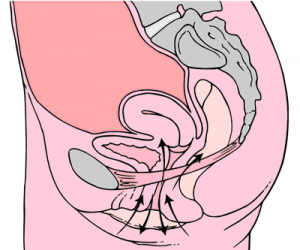
The Kegel Exercise

Introduction & History

Kegel exercises are meant to strengthen your pelvic floor musculature, which supports several important pelvic organs, such as the urinary bladder and the uterus. These exercises were developed in by Dr. Arnold H. Kegel, an American gynecologist, in the late 1940’s, as a nonsurgical treatment to prevent urinary incontinence.

Technique

It is very important to “find” the right set of muscles to work on, as many people (one-third of all) perform a Kegel exercise incorrectly, and are actually working their abdominal, buttock, or inner thigh muscles. Therefore, their exercises are ineffective in reaping the benefits of a strengthened pelvic floor.

So how do you locate your pelvic floor muscles? Well, there are several techniques can be used to find the right set of muscles to exercise.

Patients should think of performing the Kegel exercise as if they are trying to avoid passing gas. Women can pretend as if they are tightening their vagina around a tampon. Men should pretend they are trying to stop the urine stream.
Once you’ve identified the right muscles, you’ll feel the contraction more in the back of the pelvic area than the front.

So begin by choosing your position – lay on your back until you get the feel of contracting the pelvic floor muscles. Once you get the knack of it, practice the same while sitting and standing. Contract your pelvic floor muscles for 3 to 5 seconds and then relax for 3 to 5 seconds. Repeat this cycle for 10 times. During this cycle, don’t lift your pelvis and try not to contract your abdominal, leg, or buttock muscles. Place your hand gently on your belly and you’ll feel it if there is any unwanted abdominal action. Then gradually extend the time by increasing the length of contractions and relaxations. Do a variety of short and long “sprints”. Set the goal of doing Kegel exercises several times a day (30 or more) at different times. These can be done anywhere as no one can notice when are doing them.

There are a few emergent settings where Kegel exercises can be performed. If you have stress incontinence, which means that you leak urine when you cough, sneeze, laugh, bend over, or lift something heavy, doing one or more Kegel exercises before some of voluntary events (bending or lifting objects) can help prevent any leakage. Similarly, if you have urge incontinence, which means you leak urine when there is an urge while trying to get to the toilet, doing Kegel exercises may get you safely there. Make sure that you empty your bladder before doing your Kegels.


Kegels in Pregnancy

Pregnant women who perform Kegel exercises are likely to give easier births with less chance of trauma. Having strong pelvic floor muscles during pregnancy can help the pregnant woman to develop the ability to better control pelvic muscles during labor and delivery. Furthermore, it will also minimize two common problems during pregnancy: decreased bladder control and hemorrhoids.


Even after pregnancy, Kegel exercises can promote perineal healing, regain bladder control, and strengthen pelvic floor muscles.

Caution

It is important to do Kegel exercises the right way and one should get guidance from a doctor, nurse or a physiotherapist if needed. If you have pain with these exercises, you should discontinue and see a doctor. If there was a recent trauma or surgery, it is always a good idea to consult your doctor to see if it’s okay to do Kegel exercises and how much.


References:

  1. https://www.niddk.nih.gov/health-information/urologic-diseases/kegel-exercises
  2. http://americanpregnancy.org/labor-and-birth/kegel-exercises/
  3. Effect of home-based Kegel exercises on quality of life in women with stress and mixed urinary incontinence. Cavkaytar S, et al. J Obstet Gynaecol. 2015.
  4. The status of pelvic floor muscle training for women. Marques A, et al. Can Urol Assoc J. 2010 Dec; 4(6): 419–424.
  5. Improved continence outcomes with preoperative pelvic floor muscle strengthening exercises.
    Sueppel C, et al. Urol Nurs. 2001.
  6. Pelvic Floor Muscle Training: Underutilization in the USA. Lamin E, et al. Curr Urol Rep. 2016.


New Film on Vaginismus Helps Raise Awareness of Pelvic Pain

Tightly Wound, a new short film about one woman’s journey with vaginismus and pelvic rehab, gives an insight into the real social struggles that can beset sufferers of pelvic pain. The 10 minute animated film was created by Shelby Hadden and Sebastian Bisbal, and it can be viewed at www.tightlywoundfilm.com.

Vaginismus is a condition in which the vaginal muscles contract involuntarily. The muscle contraction makes it impossible to insert anything into the vagina, and the condition can have a number of causes. Shelby discovered that she suffers from this condition when she first started attempting to use tampons. In the film she describes a “tearing, stabbing pain; the worst pain I’ve ever had”.

When Shelby Hadden found herself seeking treatment, she might have expected a gynecologist to be able to clear things up right away. Unfortunately there was no clear solution to her pain. She tells us in the video that a number of doctors weren’t able to identify the cause of her vaginismus. Many even prescribed unsuccessful treatments like inserting small candles during menses, or using alcohol to loosen her muscles.

Vaginismus and Pelvic Floor Dysfunction

The scientific and medical community do not have a great grasp on vaginismus and female sexual pain disorders quite yet. A 2014 literature review published in the journal Current Opinion in Psychiatry by Simonelli et al. “did not provide clear evidence in support of the superiority of any treatment” and established that there is a need for more placedo-controlled trials. “A lot of work remained to be done to understand such a complex and multifaceted disturbance as genital sexual pain, but the articles examined showed that we are slowly adding more knowledge on the etiological cause and treatment models for such conditions.”

Women who suffer from vaginismus can often feel isolated. A 2018 study by Stout, Meints, and Hirsh published in the Archives of Sexual Behavior demonstrated that “more frequent and severe pain during intercourse leads to more loneliness, which then leads to increased depressive symptoms.” The authors show that women with pain during intercourse also experience higher rates of loneliness and depressive symptoms. This study suggests that having a sense of community is an important factor in patient care.

Creating a sense of community

That’s one reason that so many pelvic rehab professionals are excited to see this new film raising awareness of the condition. Upon it’s recent publication, Tightly Wound has been getting rave reviews from patients and clinicians around social media.

A review by Talli Rosenbaum, who is an active researcher and lecturer in the field of pelvic floor dysfunction and sexual health, shares what some of her patients experience. Talli writes that “[Tightly Wound] reflects the experience of many women with vaginismus and other forms of pelvic and vaginal pain syndromes. They feel isolated and alone, they are offered treatment solutions that are painful and embarrassing, and they frequently expose themselves to distressing and painful examinations only to be told by the examining practitioner that he or she can’t find anything wrong.” Talli’s excellent review goes on to address the role of vaginal penetration in sex and sexuality, which is definitely worth a read at tallirosenbaum.com.

Vaginismus impacts millions of women around the world, and many don’t know that treatment is an option. Women’s health support groups can help patients share resources and link up with adequately trained medical professionals. Online groups like the Vaginismus Support Facebook group are a great place to start for patients seeking peer support.

Thank you to Shelby for telling her story, and for helping to raise awareness of pelvic pain conditions.

Need to find a pelvic rehab practitioner?

Our index of pelvic rehab physical therapists and other professionals will help patients get treatment for conditions like vaginismus. Visit www.pelvicrehab.com to find a pelvic rehab practitioner near you.