Tag Archives: vulvar pain

New Film on Vaginismus Helps Raise Awareness of Pelvic Pain

Tightly Wound, a new short film about one woman’s journey with vaginismus and pelvic rehab, gives an insight into the real social struggles that can beset sufferers of pelvic pain. The 10 minute animated film was created by Shelby Hadden and Sebastian Bisbal, and it can be viewed at www.tightlywoundfilm.com.

Vaginismus is a condition in which the vaginal muscles contract involuntarily. The muscle contraction makes it impossible to insert anything into the vagina, and the condition can have a number of causes. Shelby discovered that she suffers from this condition when she first started attempting to use tampons. In the film she describes a “tearing, stabbing pain; the worst pain I’ve ever had”.

When Shelby Hadden found herself seeking treatment, she might have expected a gynecologist to be able to clear things up right away. Unfortunately there was no clear solution to her pain. She tells us in the video that a number of doctors weren’t able to identify the cause of her vaginismus. Many even prescribed unsuccessful treatments like inserting small candles during menses, or using alcohol to loosen her muscles.

Vaginismus and Pelvic Floor Dysfunction

The scientific and medical community do not have a great grasp on vaginismus and female sexual pain disorders quite yet. A 2014 literature review published in the journal Current Opinion in Psychiatry by Simonelli et al. “did not provide clear evidence in support of the superiority of any treatment” and established that there is a need for more placedo-controlled trials. “A lot of work remained to be done to understand such a complex and multifaceted disturbance as genital sexual pain, but the articles examined showed that we are slowly adding more knowledge on the etiological cause and treatment models for such conditions.”

Women who suffer from vaginismus can often feel isolated. A 2018 study by Stout, Meints, and Hirsh published in the Archives of Sexual Behavior demonstrated that “more frequent and severe pain during intercourse leads to more loneliness, which then leads to increased depressive symptoms.” The authors show that women with pain during intercourse also experience higher rates of loneliness and depressive symptoms. This study suggests that having a sense of community is an important factor in patient care.

Creating a sense of community

That’s one reason that so many pelvic rehab professionals are excited to see this new film raising awareness of the condition. Upon it’s recent publication, Tightly Wound has been getting rave reviews from patients and clinicians around social media.

A review by Talli Rosenbaum, who is an active researcher and lecturer in the field of pelvic floor dysfunction and sexual health, shares what some of her patients experience. Talli writes that “[Tightly Wound] reflects the experience of many women with vaginismus and other forms of pelvic and vaginal pain syndromes. They feel isolated and alone, they are offered treatment solutions that are painful and embarrassing, and they frequently expose themselves to distressing and painful examinations only to be told by the examining practitioner that he or she can’t find anything wrong.” Talli’s excellent review goes on to address the role of vaginal penetration in sex and sexuality, which is definitely worth a read at tallirosenbaum.com.

Vaginismus impacts millions of women around the world, and many don’t know that treatment is an option. Women’s health support groups can help patients share resources and link up with adequately trained medical professionals. Online groups like the Vaginismus Support Facebook group are a great place to start for patients seeking peer support.

Thank you to Shelby for telling her story, and for helping to raise awareness of pelvic pain conditions.

Need to find a pelvic rehab practitioner?

Our index of pelvic rehab physical therapists and other professionals will help patients get treatment for conditions like vaginismus. Visit www.pelvicrehab.com to find a pelvic rehab practitioner near you.
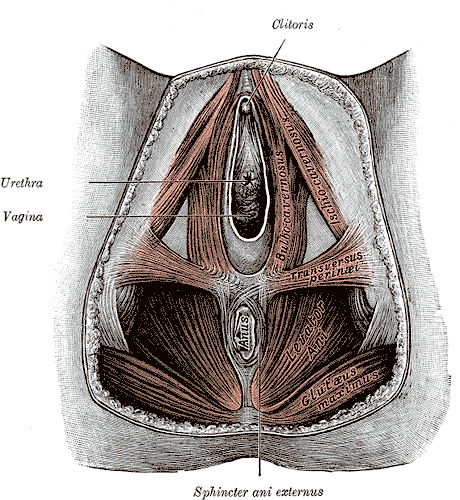
 

Common Female Pelvic Floor Disorders

There are many conditions that can afflict the pelvis, pelvic floor muscles, and pelvic girdle. The following pelvic floor disorders affect hundreds of millions of women globally. As awareness of pelvic floor dysfunction continues to increase, the ability to find a pelvic rehab therapist becomes more important. This list is not comprehensive, and trained pelvic floor rehab therapists will be able to diagnose and treat conditions not listed here.

Diastasis Recti Abdominis

Female Pelvic Floor AnatomyOften colloquially called “mummy tummy”, “baby belly”, etc, diastasis recti abdominis occurs when the abdominal muscles are separated vertically, along what’s called the linea albia. Clinically you would be diagnosed with diastasis recti if you have more than 2cm of separation while doing a hook lying curl exercise.

Typically diastasis recti abdominis is the result of a growing fetus putting pressure on the abdominal muscles and causing them to separate. Of course, there are other ways that this type of pressure can happen, so we shouldn’t only associate the condition with pregnancy. While the majority of sufferers are postpartum women, DRA can also occur in men. It’s related to aging, weight fluctuations, weight lifting, or other circumstances that result in high pressure within the abdominal wall.

The condition is treatable, and women who experience diastasis recti abdominis can get pelvic rehab by finding a trained pelvic rehab practitioner.

For more, see our post “What’s the Deal with Mommy Tummy?” on The Pelvic Rehab Blog.

Vulvodynia

Vulvodynia is chronic pain in the vulva with an unknown cause. Vulvodynia can be localized to specific locations in the vulva, or it can be generalized pain that impacts the whole vulva and is more constant. Pain in the vulva can be caused by touch (prolonged sitting, tightly-fitted pants, touch, medical exams, etc.), or the pain can occur chronically without a direct stimulus.
The National Vulvodynia Association is an excellent resource for women suffering from this condition, and you can find treatment for vulvodynia on our practitioner directory on www.pelvicrehab.com.

Dyspareunia

Dyspareunia is the experience of pain while engaging in vaginal intercourse, and it occurs in at least 8% of American women by age 40. Some potential causes of vulvar pain can be infectious, inflammatory, neoplastic, neurologic, trauma, iatrogenic, or hormonal deficiencies. Vaginal pain during intercourse can be frequently misdiagnosed, making it important for women who suspect they may have dyspareunia to find a pelvic rehab practitioner who is trained to recognize the condition. More information is available in our post “Why is it hard to get treatment for painful sex?” on The Pelvic Rehab Blog.

Urinary Dysfunction

Female urinary incontinence (the unintentional loss of urine) is very common, and it is often associated with weak pelvic floor muscles. Stress Urinary Incontinence is leakage resulting from any physical activity. Oftentimes women experience leakage when coughing, sneezing, laughing, or participating in more rigorous physical activity like exercising.

Endometriosis

Endometriosis occurs when tissue that should line the inside of the uterus forms on the ovaries, fallopian tubes, and other areas outside of the uterus. Endometriosis can lead to inflammation, scar tissue and adhesion formation and myofascial dysfunction throughout the abdominal and pelvic regions, and it can cause infertility in some cases. It affects up to 15% of women of reproductive age, and the severity of symptoms can vary greatly. Because endometriosis can be difficult to diagnose, it is important to find a pelvic health practitioner who is trained to treat pelvic rehab conditions.

Dysmennorhea

Dysmennorhea is the condition of experiencing pain with menstruation, and it afflicts as much as 50% of reproductive age women. Primary dysmenorrhea is related to menstruation, and often begins within a short period of time once menses occurs, whereas secondary dysmenorrhea is often related to a condition within the reproductive tract such as endometriosis or fibroids. There is strong evidence that pain with menstruation can be diminished with pelvic rehabilitation, making it all the more important that patients are able to find a pelvic rehab clinician near them.

Why is it hard to get treatment for painful sex?

Painful sex isn’t normal

Millions of women experience pain during sex, and unfortunately society has a tendency to stigmatize it. Contrary to what some may have been told, it’s not in your head, and it has nothing to do with how much you care about your partner. Anybody can have a healthy, pain-free sex life, no matter your age.

In a February 2016 post on The Pelvic Rehab Report, pelvic rehab specialist Holly Tanner, DPT, PRPC observed the following:

“Unfortunately, one of the most common things we hear in pelvic rehab is ‘I hope you can help me, you’re my last hope’… How long did it take this patient to find her way to pelvic rehab? Research tells us that most women have been through multiple physicians, under- or misdiagnosed, and that many have failed attempts at intervention with medications or procedures.”

Dr. Tanner goes on to discuss how vulvar pain can affect a woman’s sex life. The condition of experiencing pain during intercourse is called dyspareunia, and those who suffer from it may have to face more than just the pain. A study by Nguyen et al., 2013 found that women who reported chronic pain were more likely to perceive being stereotyped by doctors and others. Interestingly, among the group of women who had chronic vulvar pain, the women who sought care for their condition reported feeling more stigmatized.

Consult a pelvic rehab professional

Estimates are that 8% of American women will suffer from dyspareunia by the age of 40, and at least half of those who seek treatment won’t be properly diagnosed. According to Dr. Tanner, factors that cause vulvar pain can be infectious, inflammatory, neoplastic, neurologic, trauma, iatrogenic, and hormonal deficiencies. Clearly it is essential to consult a medical practitioner who has an understanding of pelvic conditions like vulvodynia (vulvar pain lasting more than three months) and dyspareunia. If you need help, your first step is to look through our directory of pelvic rehabilitation practitioners.


References and further reading:
Arnold, L. D., Bachmann, G. A., Kelly, S., Rosen, R., & Rhoads, G. G. (2006). Vulvodynia: characteristics and associations with co-morbidities and quality of life. Obstetrics and gynecology, 107(3), 617.
Brotto, L. A., Yong, P., Smith, K. B., & Sadownik, L. A. (2015). Impact of a multidisciplinary vulvodynia program on sexual functioning and dyspareunia. The journal of sexual medicine, 12(1), 238-247.
Harlow, B. L., Kunitz, C. G., Nguyen, R. H., Rydell, S. A., Turner, R. M., & MacLehose, R. F. (2014). Prevalence of symptoms consistent with a diagnosis of vulvodynia: population-based estimates from 2 geographic regions. American journal of obstetrics and gynecology, 210(1), 40-e1.
Nguyen, R. H., Turner, R. M., Rydell, S. A., MacLehose, R. F., & Harlow, B. L. (2013). Perceived stereotyping and seeking care for chronic vulvar pain. Pain Medicine, 14(10), 1461-1467.